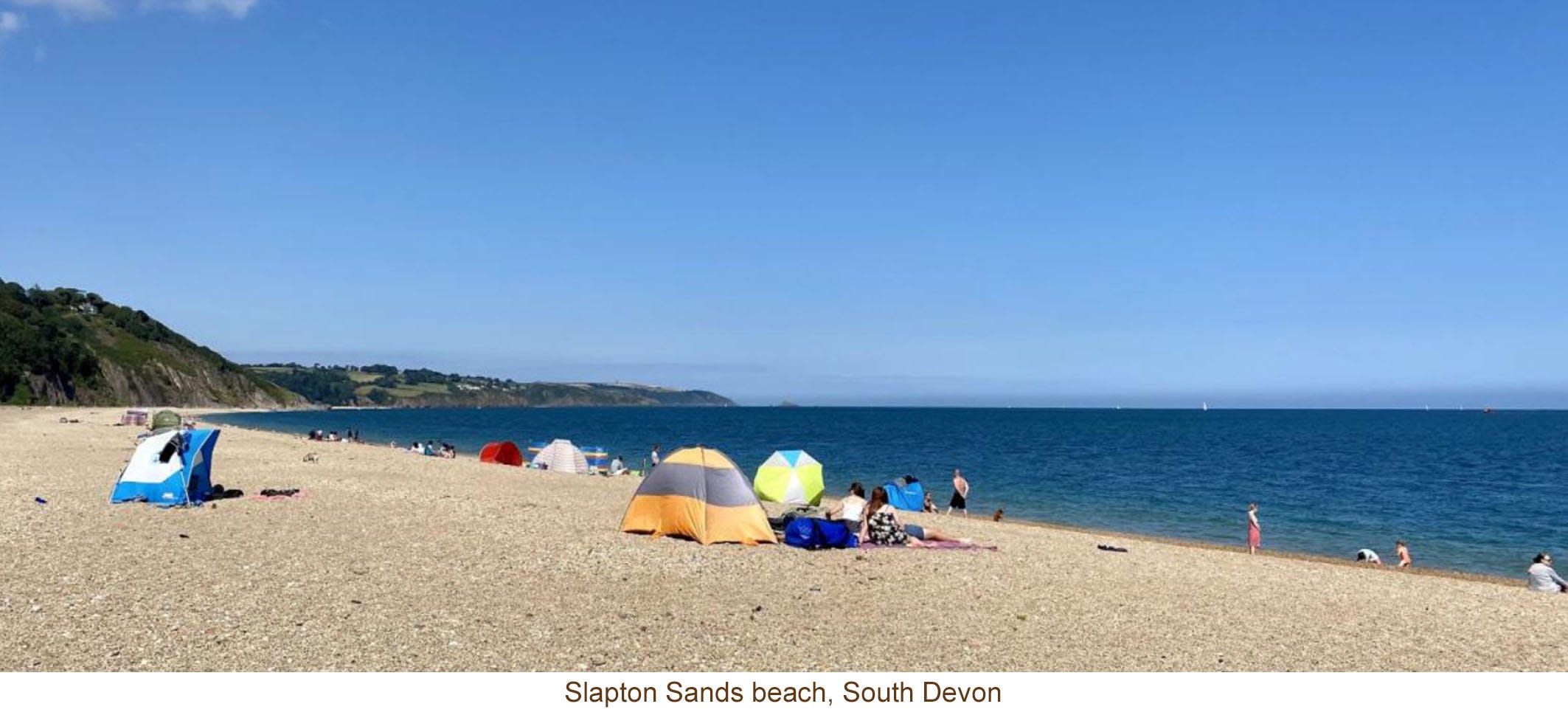
We are now in Devon for six days. We are currently staying in very nice bed and breakfast accommodation in Dartmouth and will move on later to another place overlooking the sea further round the coast. So far, the weather has been quite good. Although it has been dull in the mornings, the sun has been out in all its glory by mid-afternoon. The temperatures are in the low 20s, but still sufficient for Rosemary and I to go swimming at our favourite beach at Slapton.
August 21, 1993
Thanks for reading From the Bush to Bush House and Beyond! Subscribe for free to receive new posts and support my work.
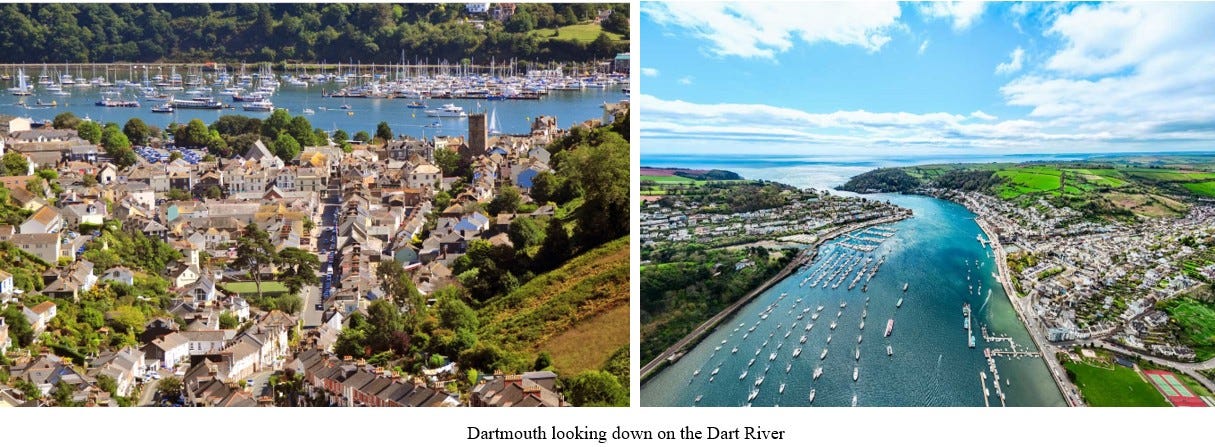
One of the great joys of this visit to Dartmouth has been to stand at the window of our lovely room and enjoy the wonderful day and night-time views across the harbour. We have really struck it lucky with the weather and the accommodation. Dartmouth is such a peaceful and beautiful place with its great variety of ancient buildings clinging to the steep hillsides down to the harbour. It is certainly not a place for people in poor health because the streets are so steep.
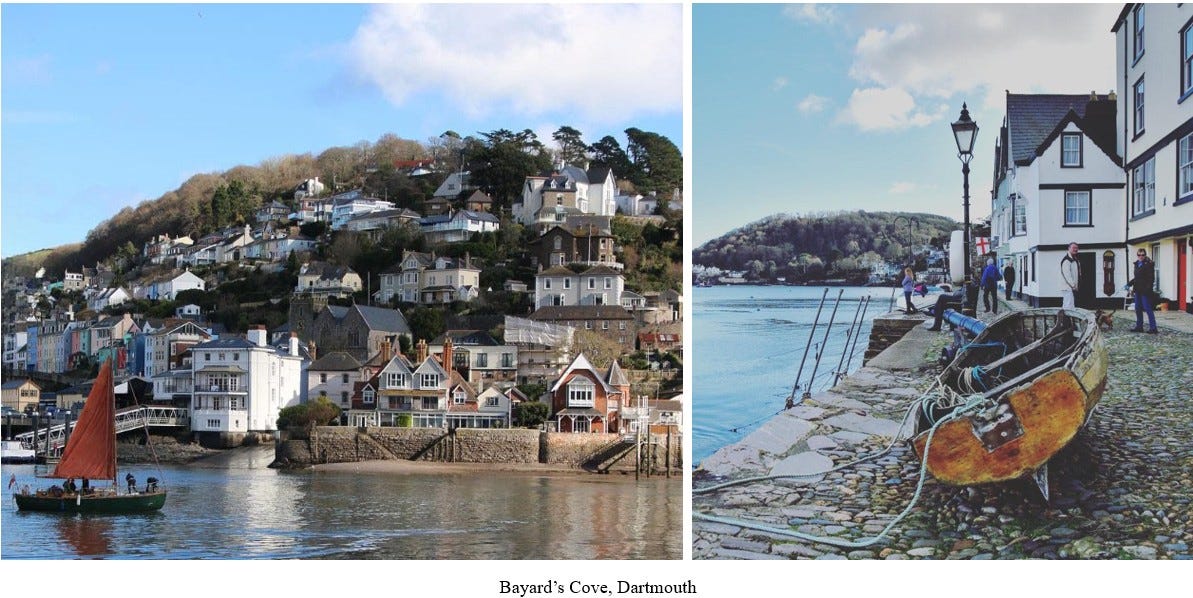
It is like a fantasy town, but it is all real and has been the centre of many important historical events over many centuries. It was from Dartmouth that the Pilgrim Fathers left the shores of England on their way from Plymouth to the Americas. Just below where we are staying is Bayards Cove which was used to represent Liverpool port during the very successful TV sailing ship series of some years back, the “Onedin Line”.
August 23, 1993
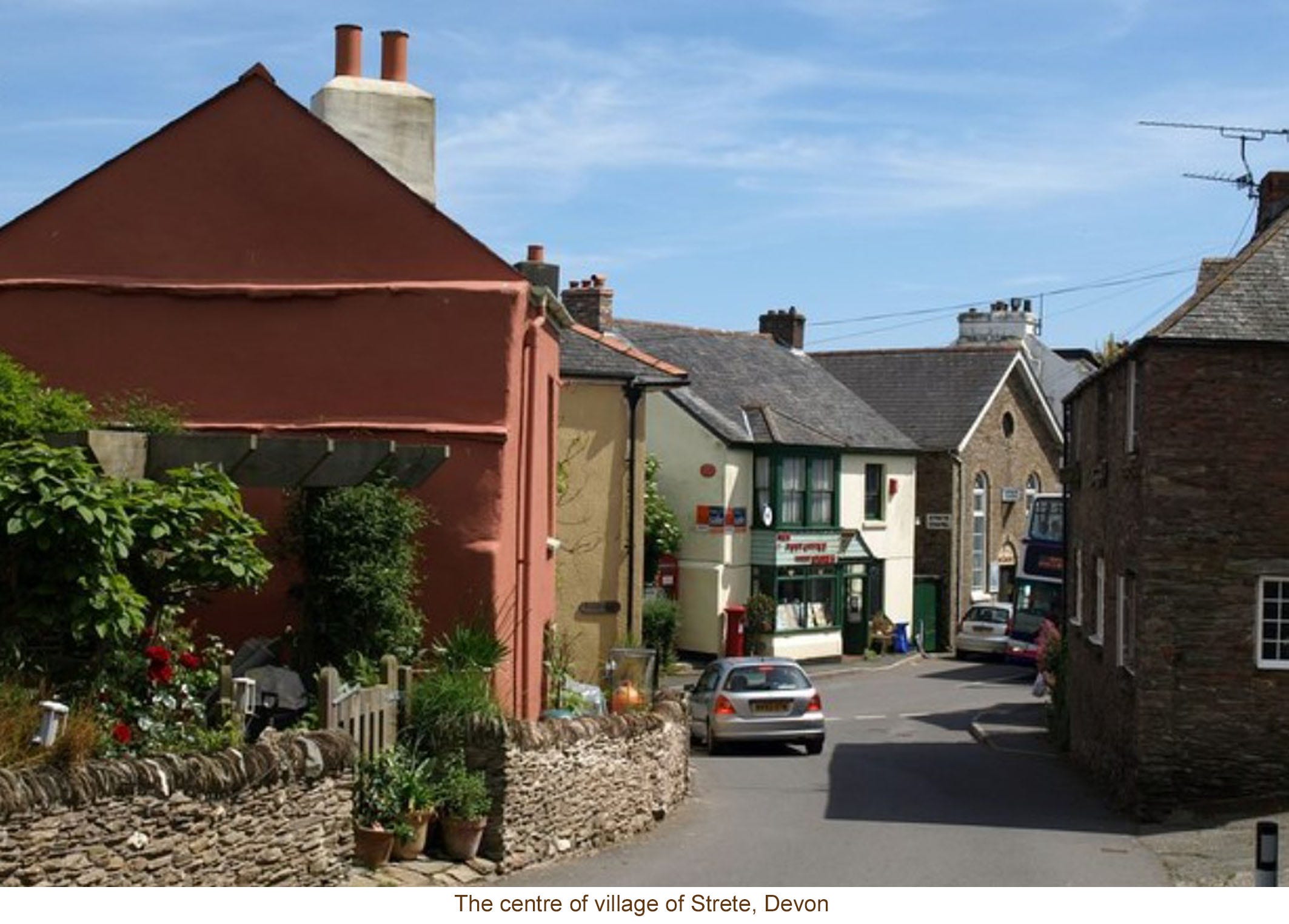
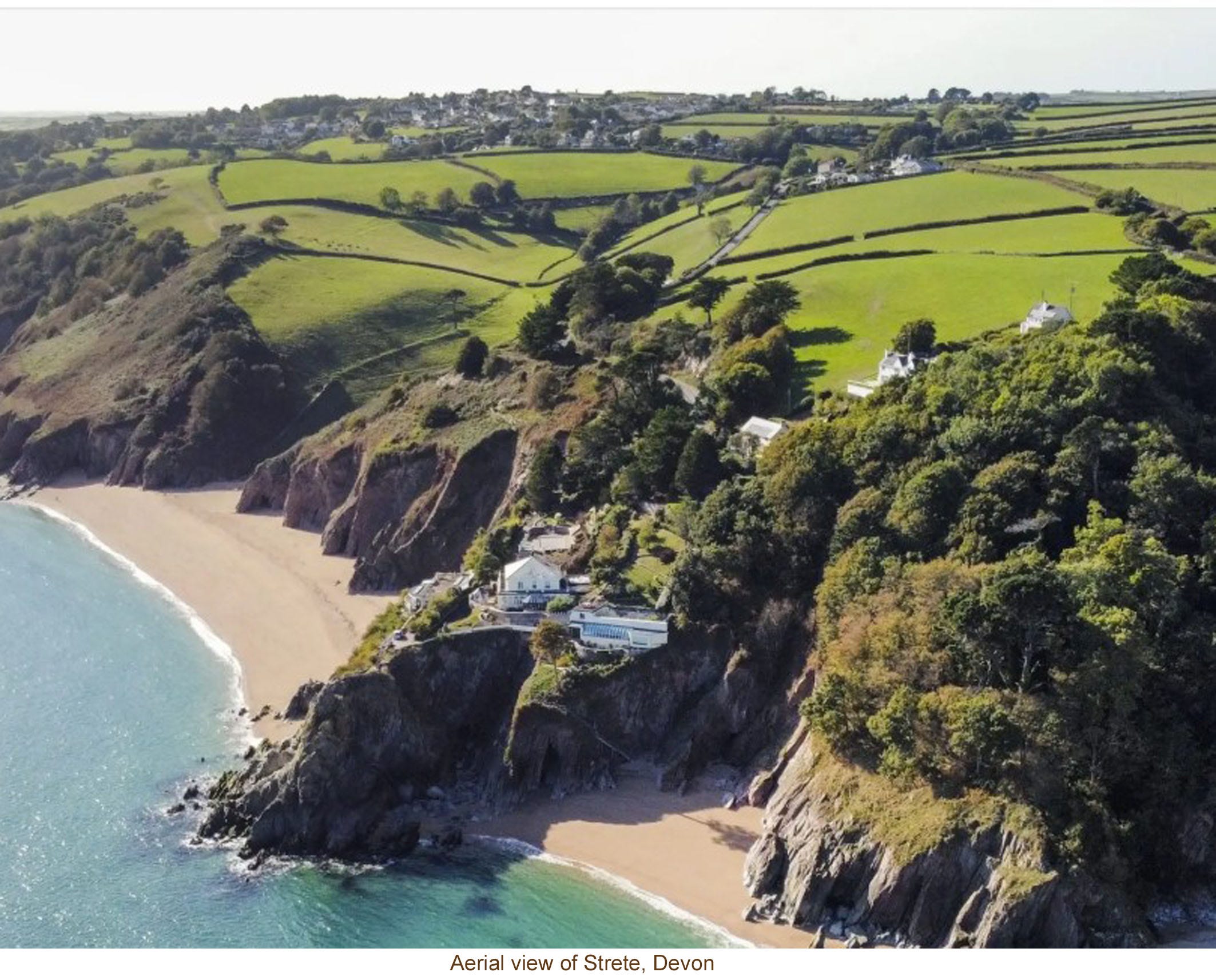
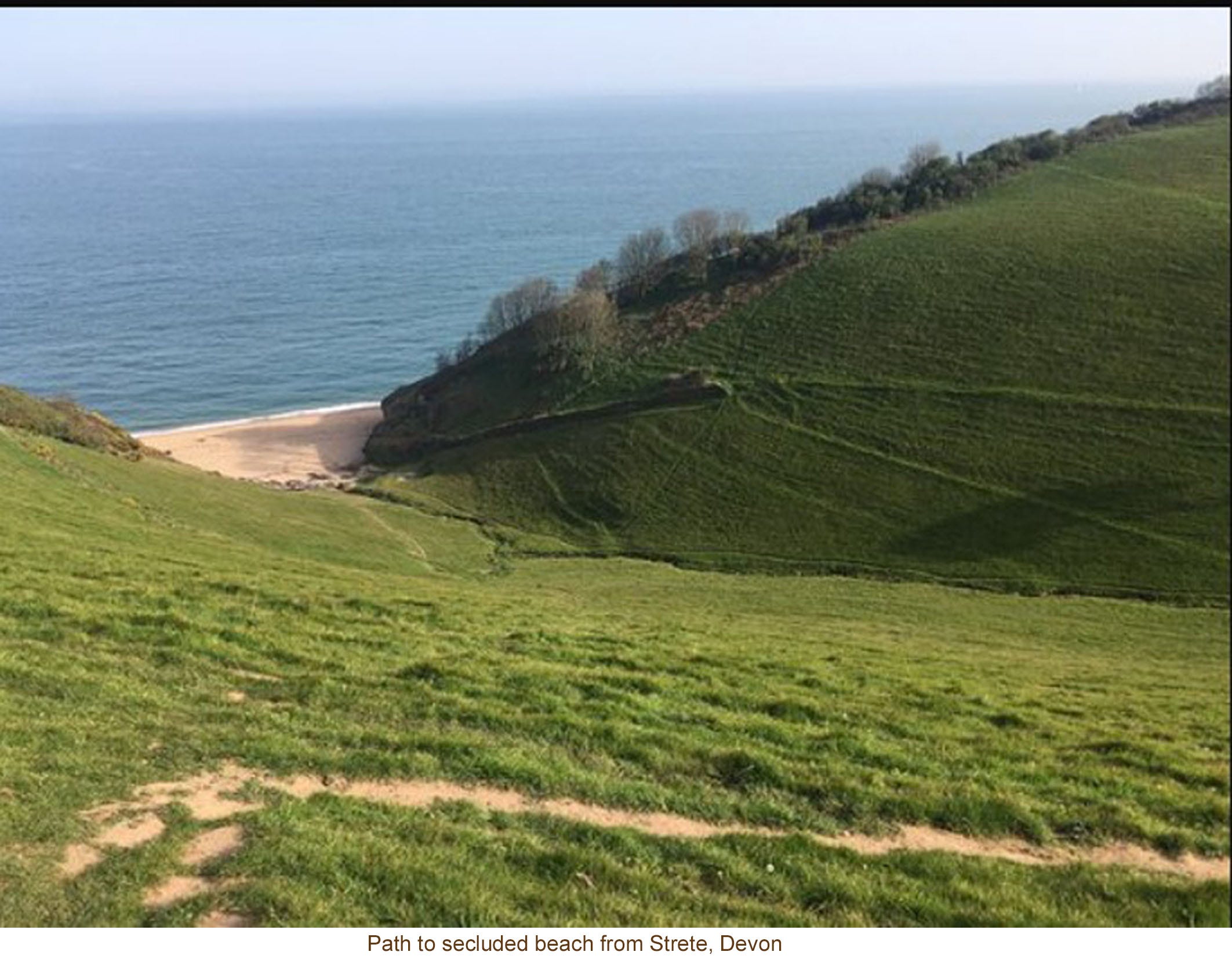
Yesterday we moved from Dartmouth to the village of Strete between Dartmouth and Slapton. We are in bed and breakfast accommodation above cliffs overlooking the English Channel. The views are magnificent, and it is possible to walk down a steep path to a secluded beach, accessible only by foot or by boat.
It is interesting to compare the three bed and breakfast homes we have used this time. All have been excellent, but in different ways. This is one of the reasons why B&B can be such fun. The first place was run by an Australian guy from Frankston and his English wife. I would guess they are both from well-to-do families, and they both spend most of the English winter at their home in Frankston. Their place in Dartmouth is decorated in great style, and as well as offering B&B, provided dinner parties to order in their home on a massive dining room table they had made. The second place was also classy, but more amusingly eccentric. Everywhere there were toy or china pigs, and the visitors’ book had some quite amusing entries. The owners were English. The husband had once lived in Kenya and I suspect was someone who had been made redundant and had decided to go into something different. Then, the third place is run by a retired policeman from Rochdale and his wife. The house doesn’t have the style of the other homes but is spotless and extremely well cared for.
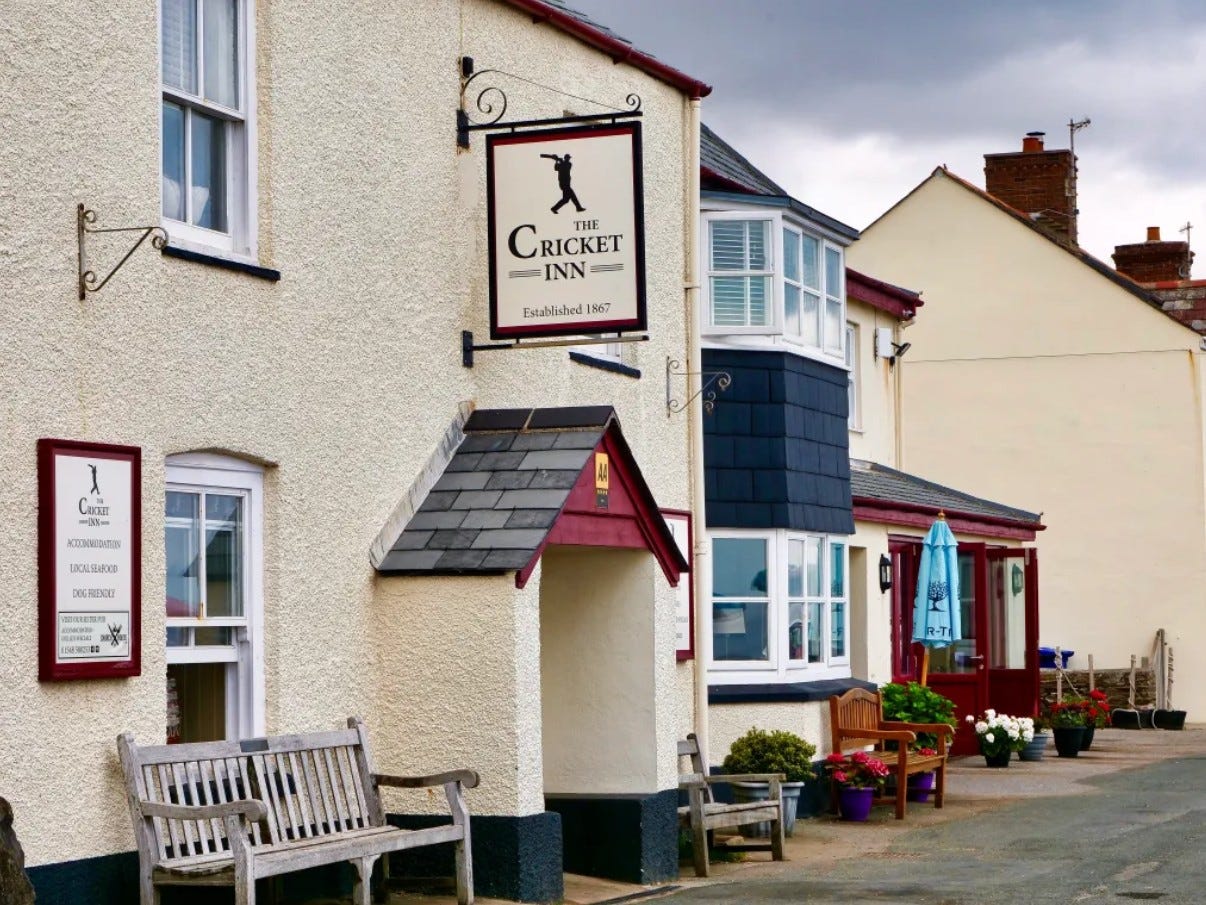
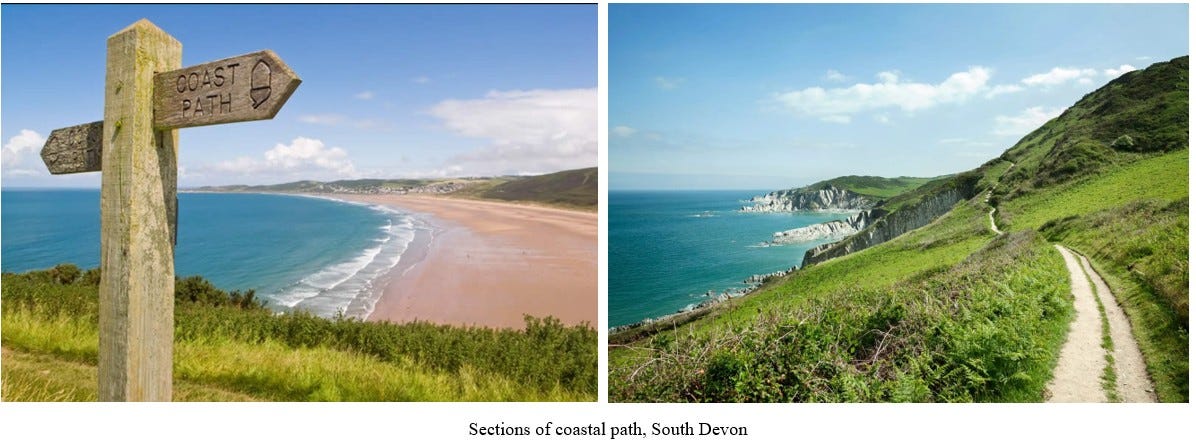
Our hosts recommended a coastal walk about 10 miles away. It was magnificent, and the weather was excellent, even though rain had been forecast. The first leg of the journey was about one and a half miles and took us to a fine pub, the Cricket Inn at Beesands, with its excellent food and lovely beach.
The return leg wound around the rugged coastline for about three miles at a height of about 100-feet above sea level.
August 28, 1993
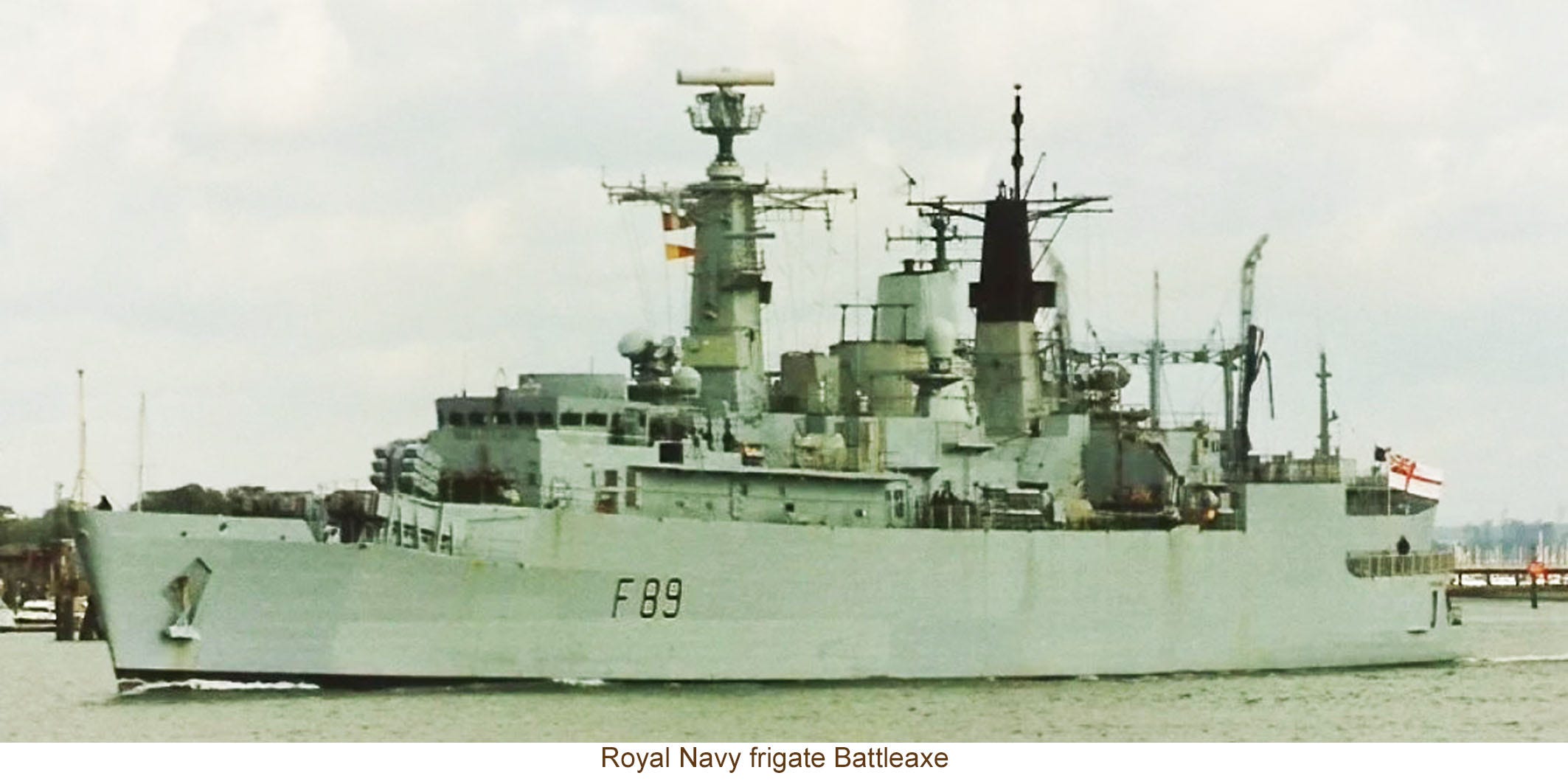
Our final day in Devon was very enjoyable. We drove home via Dartmouth where Regatta Week was getting under way with the arrival of the British frigate “Battleaxe”. It was a wonderful sight seeing the huge ship coming into the narrow harbour with its guns firing in salute. It slowly made its way up the Dart River about a mile, then amazingly managed to turn around in it. I never imagined such a massive craft would be able to turn around in such a small space. All in all, it was a wonderful, relaxing break.
******************
Rosemary & Ian Richardson, February 1994
I took Rosemary to the South of France for four days to celebrate her 50th birthday. The weather was perfect, apart from a couple of hours late one afternoon when the clouds came over and a chill wind sprung up.
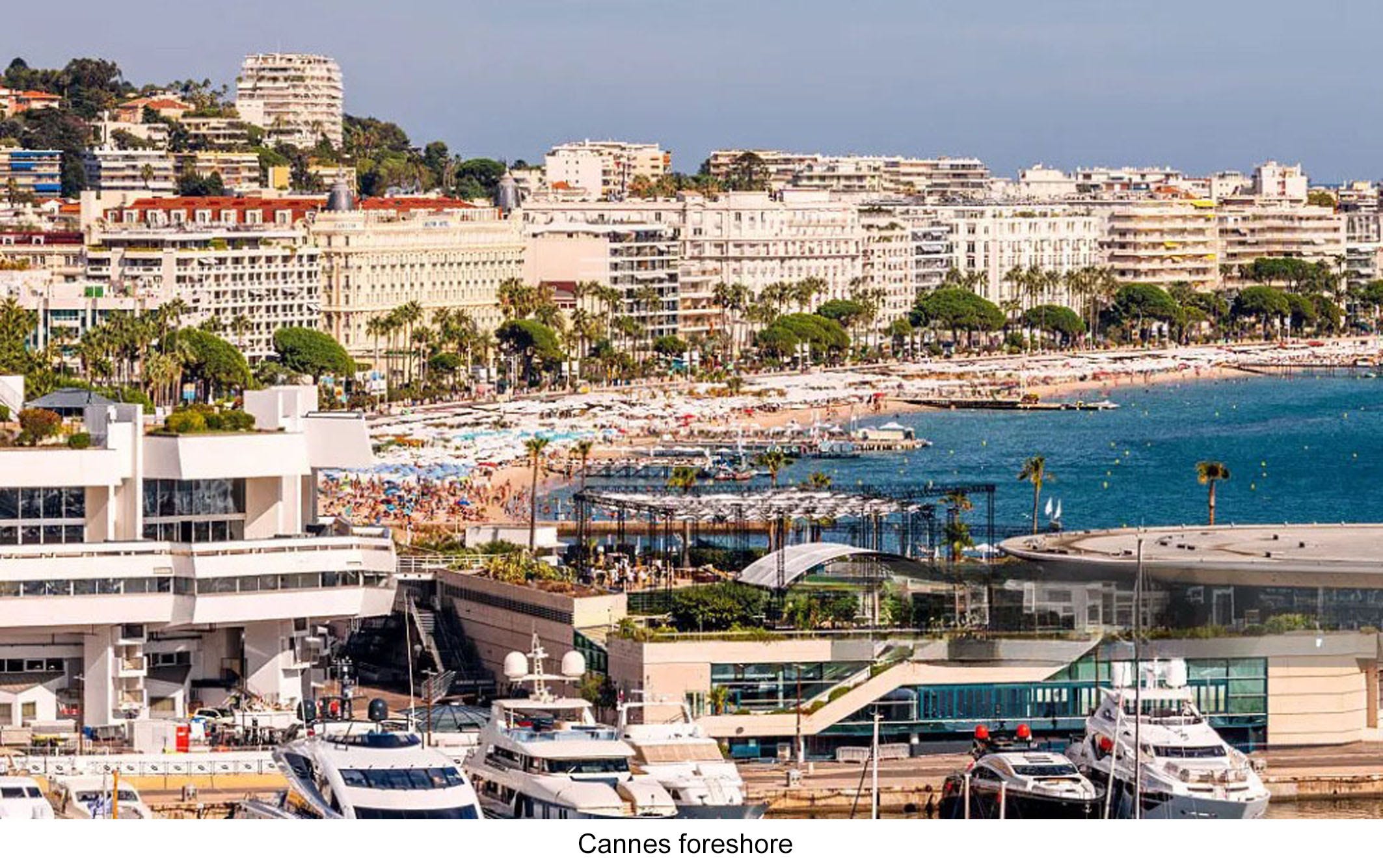
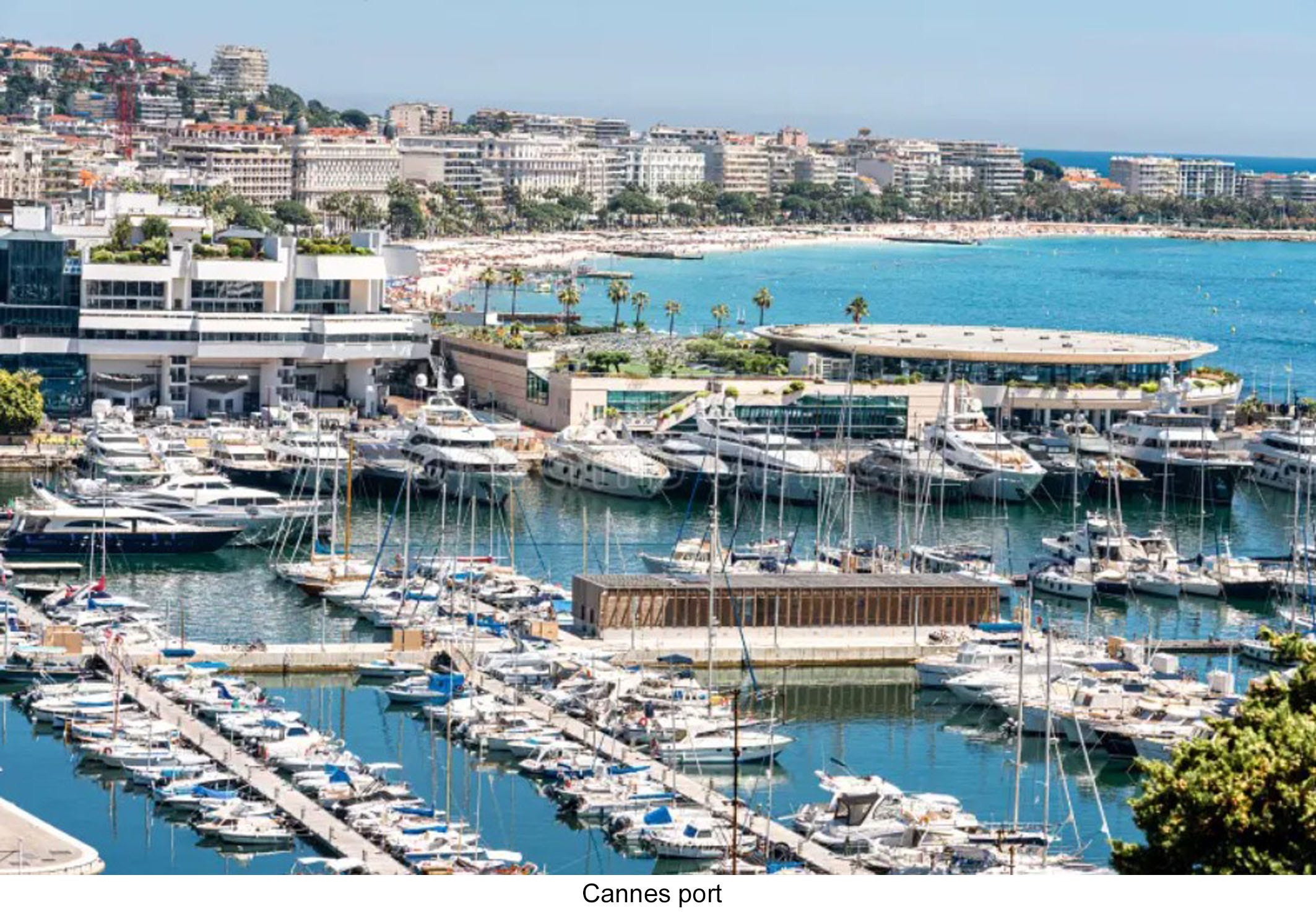
Although Rosemary knew she was going to France -- she realised that because she had to fill out a visa application -- the actual location was a surprise until we checked in at Heathrow Airport. We flew direct to Nice on the Cote D’Azur, rented a car at the airport and drove to Cannes where we were booked in for three nights in an hotel just back from the foreshore and in the centre of the town.
The skies were a brilliant blue, and although it was still winter there, the temperatures hovered around an exceedingly-pleasant 16C mark. It was glorious to relax over a meal or a drink in the sidewalk cafes, or to stroll along the foreshore.
Cannes is an extremely rich area, and one we could not have afforded, had we not been able to take advantage of off-season rates. The last time we were in Cannes was in October 1969 when we did an impoverished two-week tour of Europe in the second-hand Morris Minor 1000 van we then owned and had converted into a sleeper. We mostly lived on bread and cheese, hot dogs and cheap wine. When we stayed in Cannes then, we found a space close to the foreshore. [See Chapter 20: Tour of the Continent]
When I talk of the area being “rich”, I mean “seriously rich”, with fur coats for everyday wear and marinas choked with yachts that could each just about provide accommodation for an entire family. We had never seen more fur coats to the hectare in our lives. What came as something of a shock was not just that the owners could afford the coats, but that they happily wore them in an age when wearing a fur coat in many cities would attract not just verbal abuse, but sometimes violence. Cannes is clearly a very politically-incorrect place.
Many of the women, and some of the men, looked grotesque in that they clearly had no idea how to grow old gracefully. They obviously didn’t know the difference between “looking their best” and looking ludicrous. It was weird to see women in their 60s and 70s parading about, stick-thin, in clothes designed for people in their teens or early 20s. The current anti-smoking campaigns in most parts of the world appeared not to have had any impact on most women living in the South of France. I am sure that they regarded cigarettes as an elegant fashion statement rather than a health hazard. Small dogs were also a very popular fashion accessory. The dogs -- most of them poodles -- were taken everywhere, including into food shops and restaurants. Many of the owners didn’t even expect the dogs to walk; they carried the bloody things in special carrier bags. It brings a new meaning to “doggie bag”.
The Cannes population certainly helped provide us with endless entertainment. We also enjoyed window shopping in the expensive designer clothes and furnishing shops in central Cannes. You have to hand it to the French: they really do have style. Some of the furnishings, household nick-nacks and clothes were breathtakingly imaginative and beautiful.
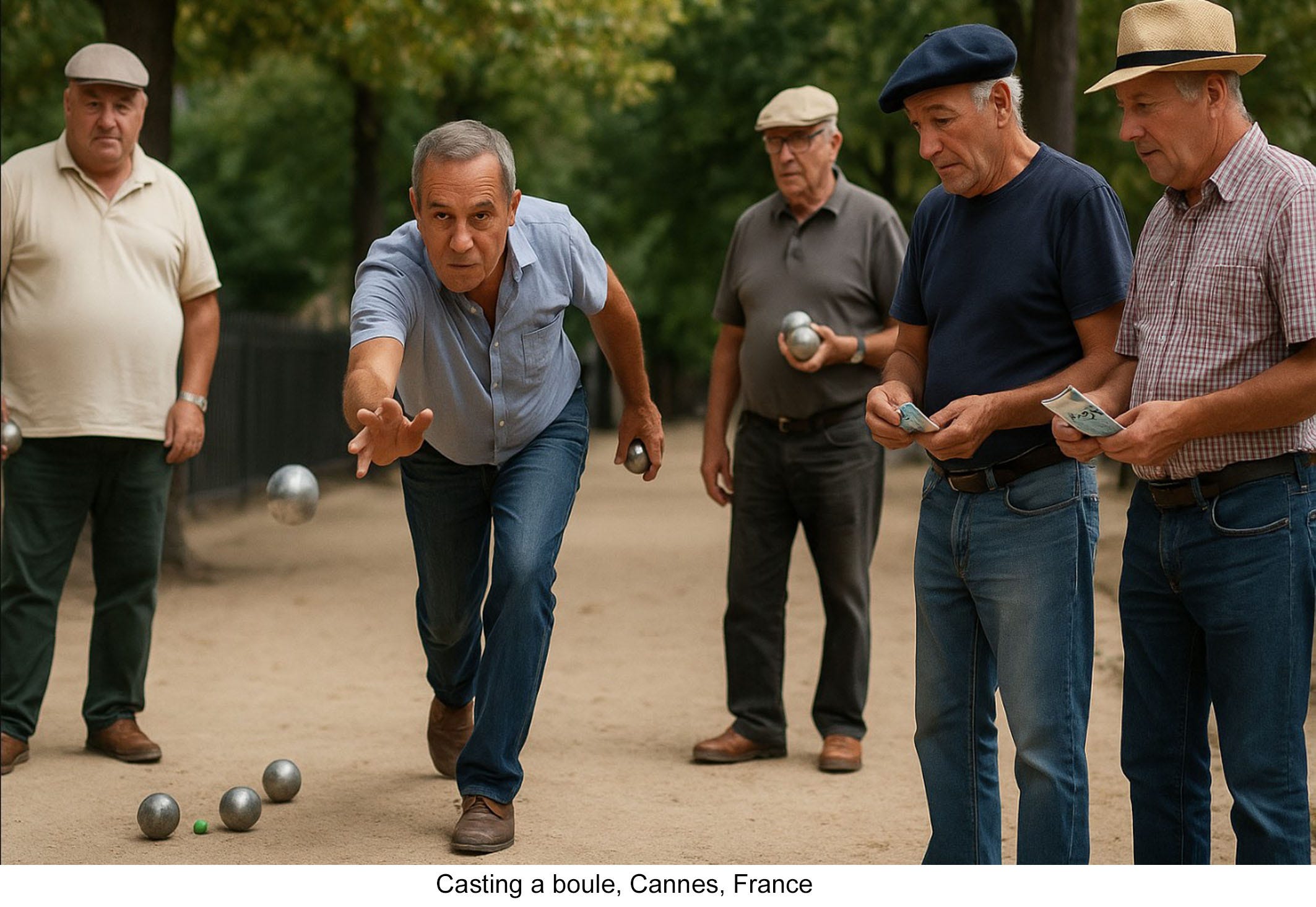
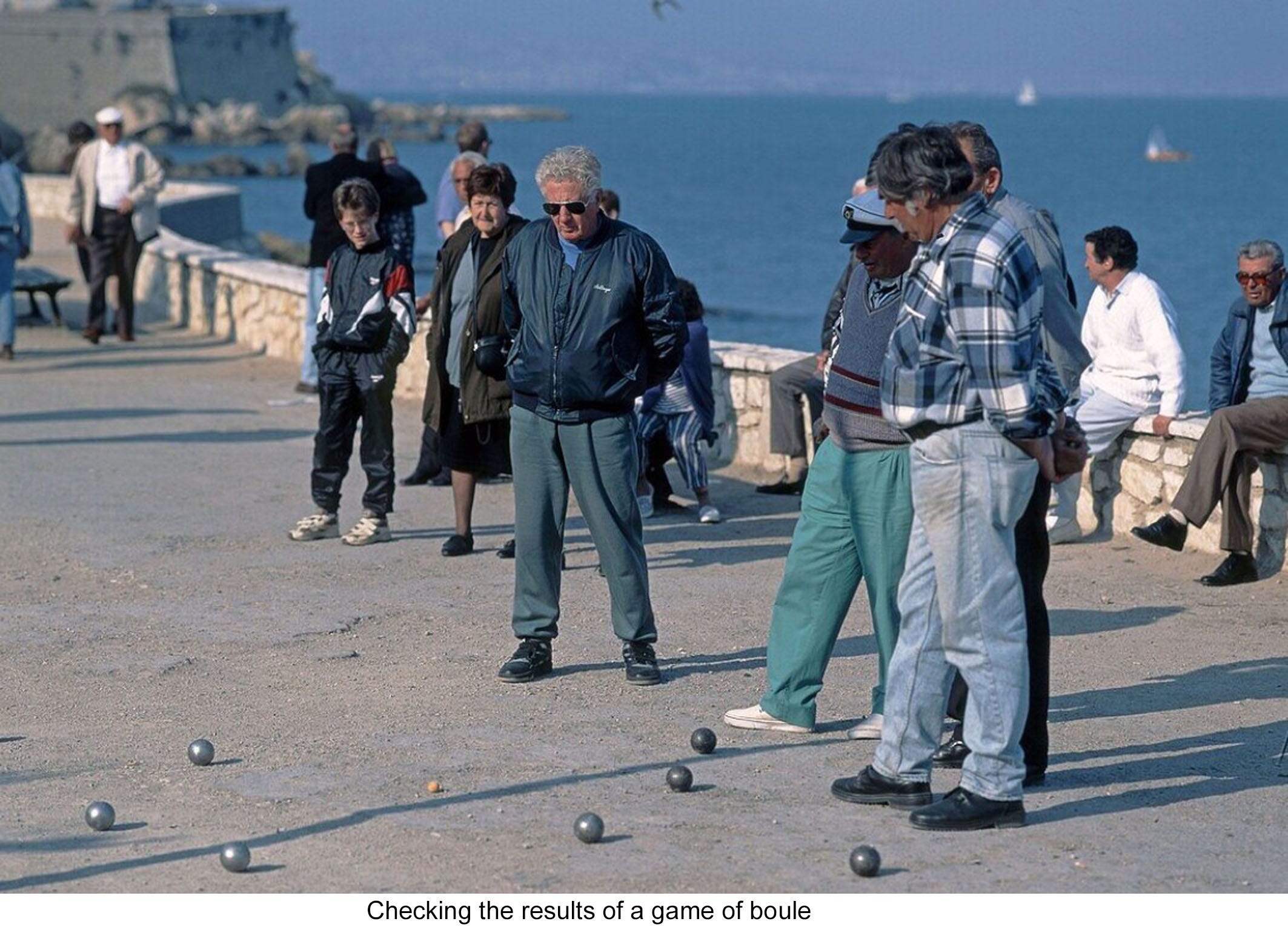
Another source of entertainment were all the old men playing boule in a park on the foreshore. There must have been hundreds of them, all in small groups under the plane trees. Boule, if you don’t already know, is played on earth — any old earth, it seems — with steel bowls. The aim appears to be to get your boule as close as possible to the kitty and if anyone gets closer, you try to knock theirs away. Unlike lawn bowls, the steel boules are thrown with a back-spin to stop them rolling too far from their target. The players’ coats were hung on special steel racks under the plane trees and concreted into the ground.
On our second day, we drove round the coast towards San Tropez. We never made it there because we took the long, winding coastal road and stopped too often to enjoy the beautiful scenery. There were quite a few eucalypts among the trees, and the wattle trees were in blossom. Away from the built-up areas, it was quite easy to imagine that we were travelling along some of the nicer parts of the Mornington Peninsula in Spring. Of course, the moment we came to houses, the illusion was broken by the very distinctive Mediterranean architecture. We got as far as St Raphael, a resort which appeared to be pretty much closed down for the winter. It took us ages to find a restaurant or café that was open.
Our little Renault 5 hire car was just right for us. Being a left-hand drive vehicle, it was a useful reminder to me that we were in a foreign country where people drove on the right-hand side of the road - and that I had to drive anti-clockwise around the roundabouts! Rosemary kept a beady eye out for any motoring transgressions on my part and carried both a map for directions and a small English/French dictionary for some emergency translations. Sadly, neither of us is fluent in French, but over the years we have accumulated a narrow but useful French vocabulary. Fortunately, many people in the South of France speak some English, so in a tight corner, we could usually find someone to help us.
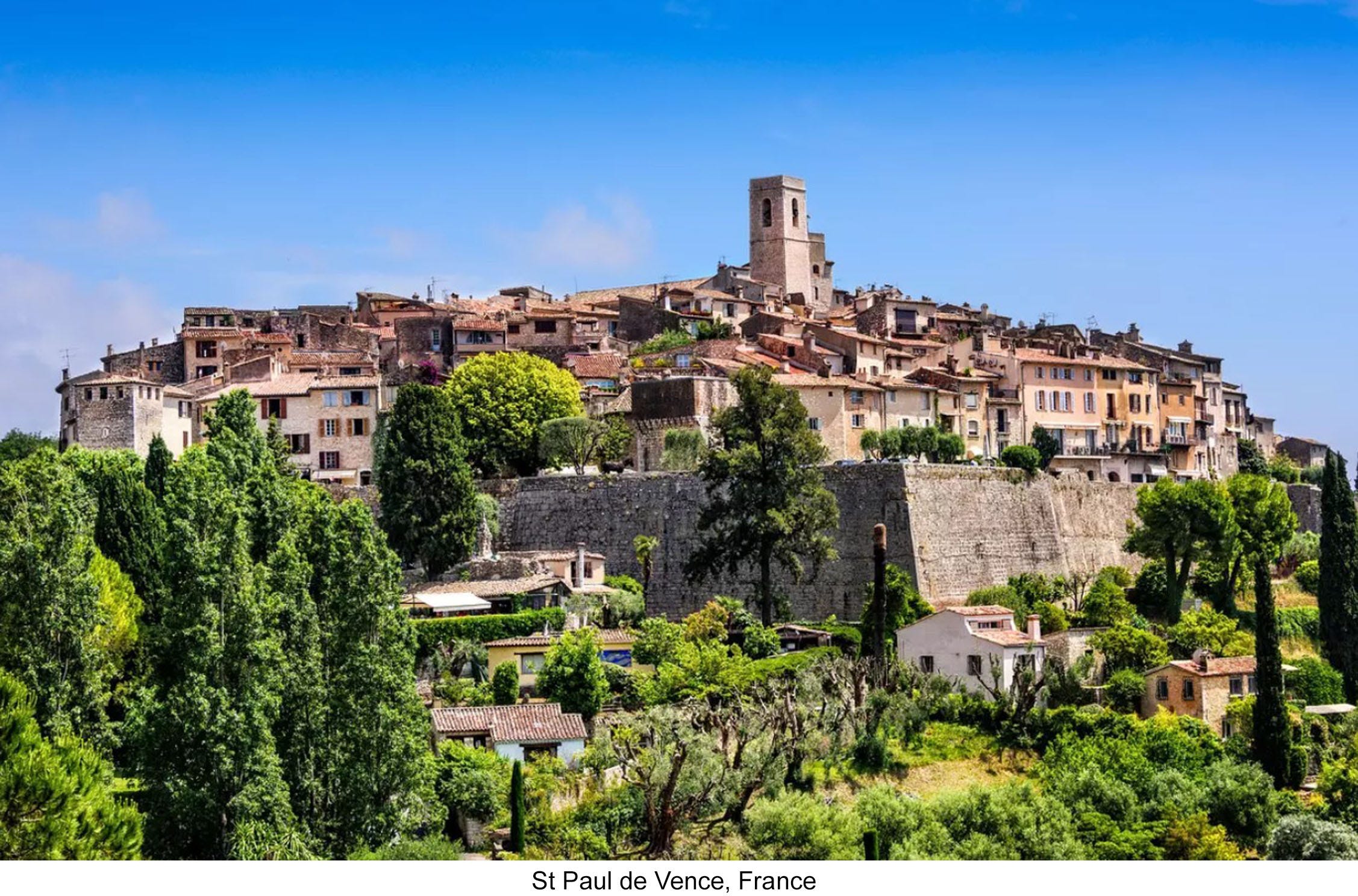
Most of our third day was taken up with a trip inland to the medieval village of St Paul de Vence, a famous centre for artists. The graves in the beautiful local cemetery include that of the painter Marc Chagall. The village is on a hilltop and is surrounded by a high wall. The streets are so narrow that very few of them are wide enough to take even a small car but it was a very pretty place.
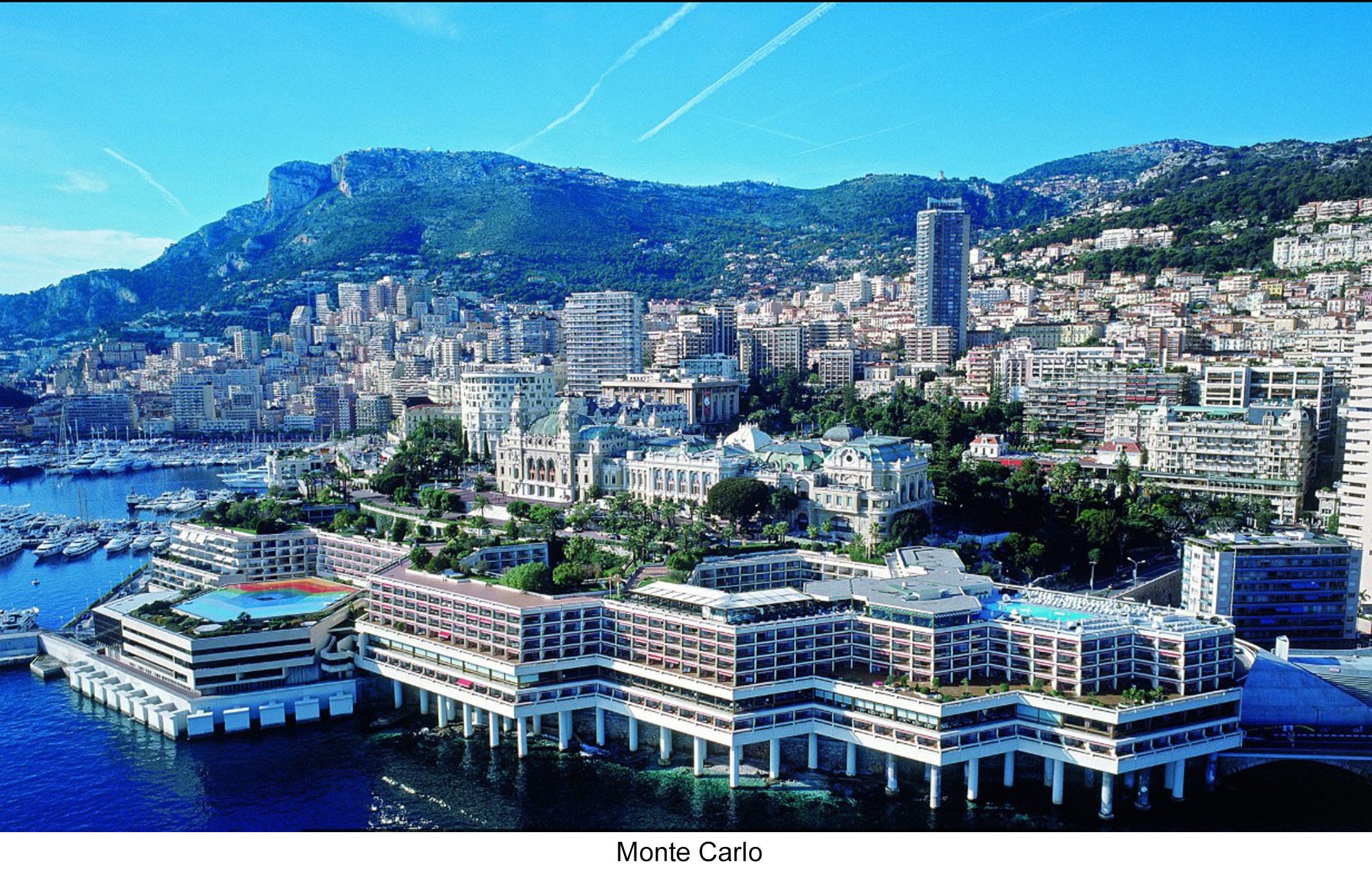
The next day we went briefly to Monte Carlo. By accident we went there on the Autoroute. It was a spectacular road high in the mountains back from the coast. The exit from the Autoroute was via a long tunnel that plunged down to the outskirts of Monte Carlo.
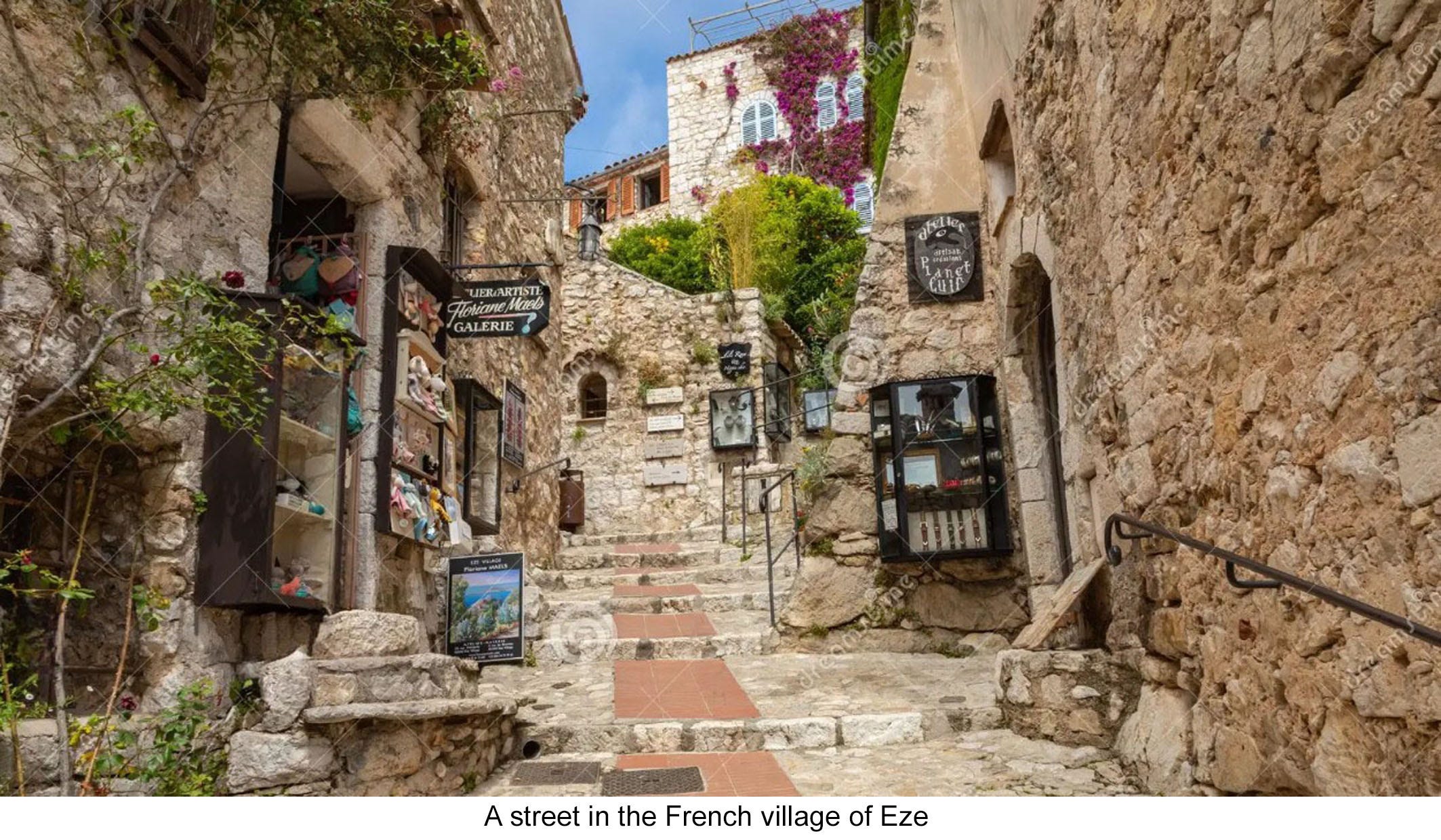
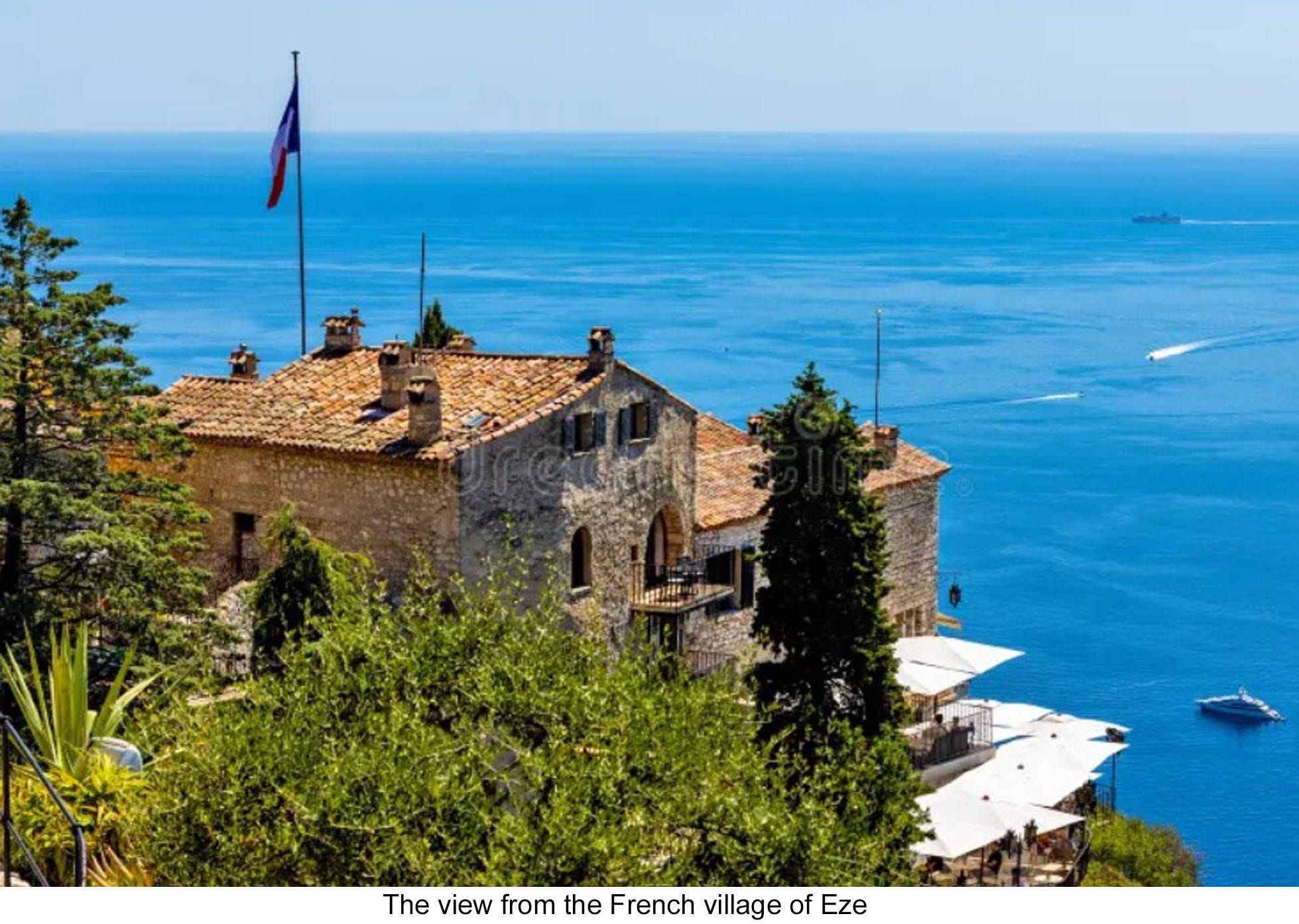
After a cup of coffee and a quick look around, we returned to Nice via another medieval village, Eze. This is about a couple of kilometres back from the coast, but at least 1000 metres above sea level. It gave us a spectacular view. Not surprisingly, there was a terrific sense of history. As we wandered along the narrow streets or entered buildings, it was impossible not to wonder what events, both good and bad, had taken place there over the centuries.
The final day again brought brilliant sunshine, so it was rather sad for us to have to leave for home and, as it turned out, some very cold weather.





Wow...another great and very interesting read.
You and Rosemary have done so much travelling and made some wonderful memories since your days in Bendigo ..
Love to you both ...Helen x