

Chapter 73: Beijing uprising - part two

Continued from the previous chapter:
As events unfolded with astonishing speed, it became clear that we needed more people, but by then it was too late. I can’t recall working so hard in my life. Because the story was so complex and because we had commitments round the clock, we operated a shift system, which often meant 22 hours on and two hours off.
The bureau had a small studio and a fixed broadcasting landline to London, but we were careful what we transmitted over that as it was certain to be monitored by the Chinese authorities. Although the Chinese had allowed an unlisted fax line to be installed in the upstairs room that we had converted into a back-up studio, they had cunningly refused to allow the BBC fax machine through customs. But a fax line is the same as a telephone line, and when I plugged in a spare phone I’d brought with me I discovered that not only was the line live, but I could also direct dial the BBC in London. I linked our temporary studio to this unlisted telephone line and used it to transmit material that might have seriously offended the Chinese authorities. As far as I could tell, the Chinese were never aware that much of what we broadcast was via that line. We used a small device called a Mutterbox to lock the line open -- often without a break for 10 hours at a stretch. We were spending well in excess of £1,000 a day keeping this line open.
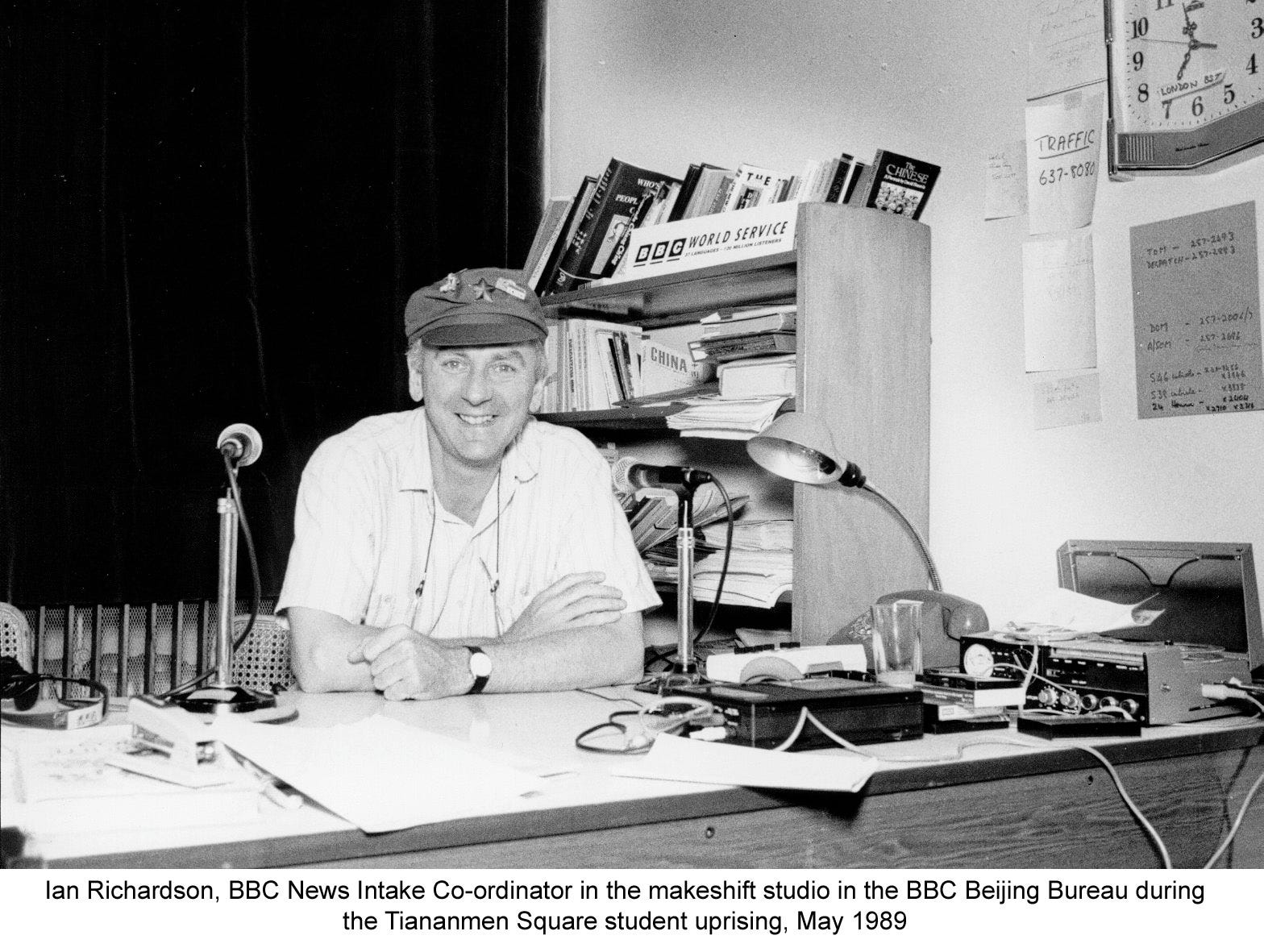
During our busiest period, I went three days without visiting my hotel room, except to have a shower and change clothes. Most days it was simpler to snatch some sleep, as the opportunities arose, on a settee in the lounge, or on the bed in our temporary studio. On one occasion, one of our correspondents went 48 hours without sleep. Towards the end of the third week we were able to get four or five hours in bed. We thought we were in heaven.
When I look back on it, I just don’t know how we survived the hours and the pressures.
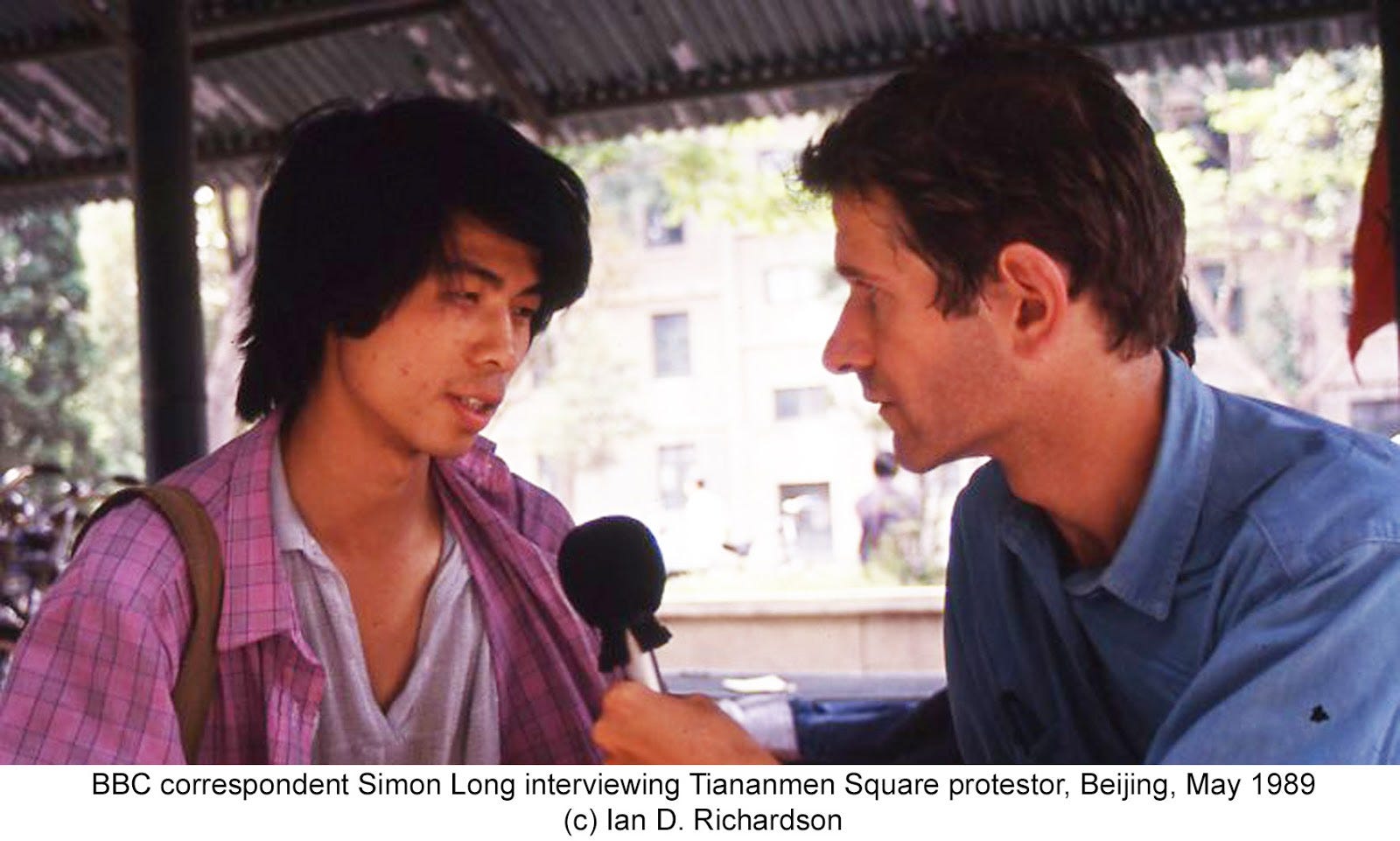
The correspondents, James Miles and Tim Luard, had the worst time. They had been hard at it a couple of weeks before the rest of us turned up, and they were still there when the massacres took place. Fortunately, we had managed to get another correspondent, Chinese talks writer Simon Long, in as back-up, but it was a horrible time for them. Not only were they exhausted and under terrible pressure, not knowing whether the authorities were going to act against them, but they had to witness the most ghastly events day after day as the military took back control. It was terrifying out on the streets and one of our correspondents went six consecutive days in which he saw people murdered.
I should at this point praise the contribution of Tim Luard’s wife, Alison McEwen, who played a key unpaid role as bureau “mother hen”, doing a lot of the organising, and most importantly, helping to ease stress and to smooth tempers. We also had the benefit of material shared by London Times correspondent Catherine Sampson who was around a lot, as she was then James Miles’s fiancée and later his wife.
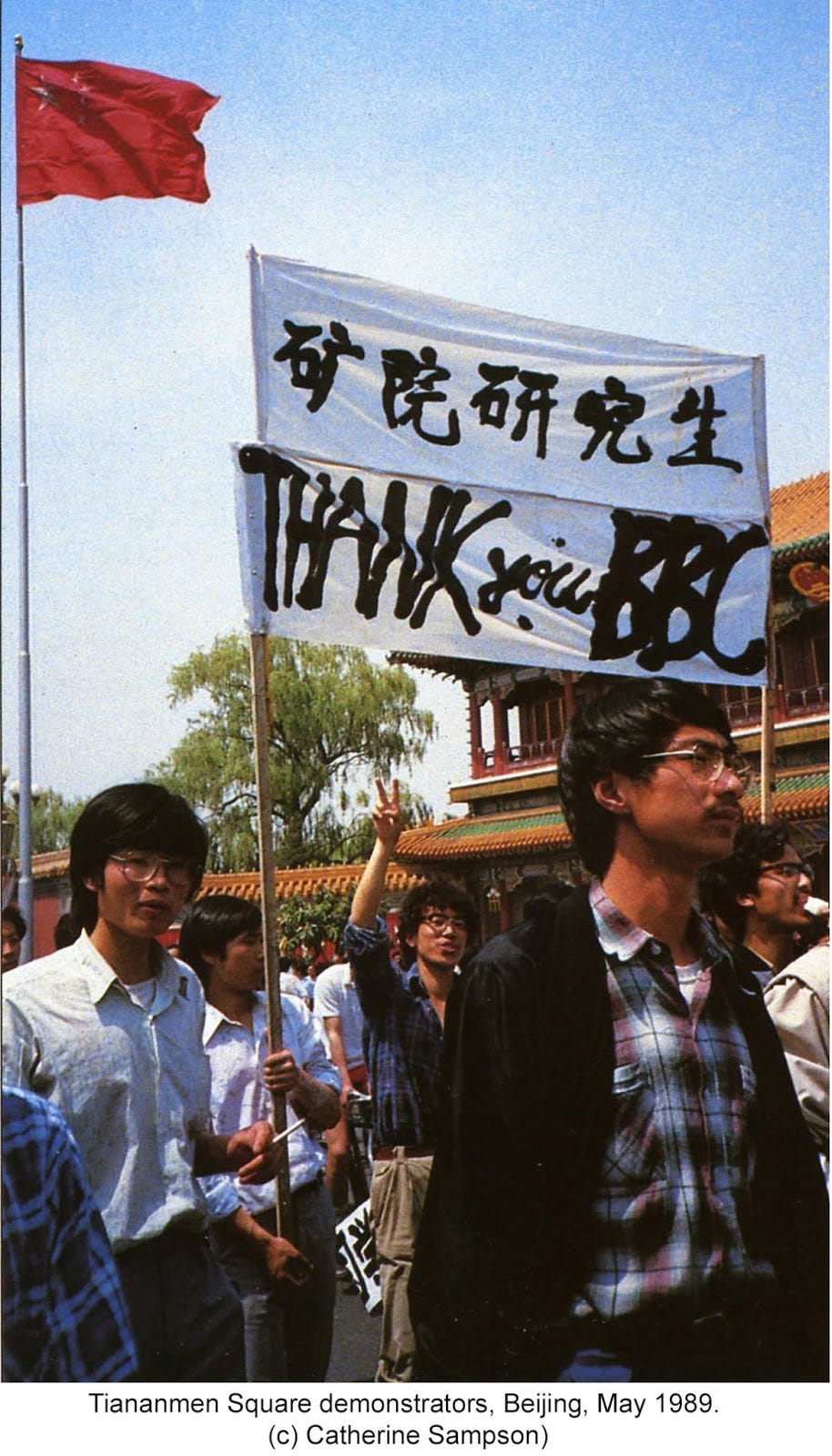
The events that unfolded were in themselves quite extraordinary, but for me, it was almost as extraordinary to experience the huge impact the BBC World Service was having in China. Six months previously, the BBC had only a small audience in China, but the combination of powerful new transmitters in Hong Kong and the emergence of the Democracy Movements changed all that, almost overnight. We were treated as heroes wherever we went. It was quite embarrassing at times. I made the mistake one day of agreeing to sign an autograph. Before I knew it, I was surrounded by people who all wanted me to sign their tee-shirts.
Our broadcasts could often be heard on Tiananmen Square and elsewhere and they were also recorded, transcribed and distributed in pamphlet form. As soon as any of us identified ourselves as being from the BBC, there would be cheers and we would be waved through the barriers. All the indications were that our audience extended right across the community and the country. The World Service audience, not including China, was estimated at 120-million. Although it is not possible to know how many people listened to us in China during the Tiananmen Square uprising, it was thought probable that the figure exceeded our total for the rest of the world.
Almost as amazing as the scenes in Tiananmen Square were those on the barricades at the intersections when it was first thought that the army was going to move into central Beijing. To give you an idea, imagine the intersection of Flinders and Swanston streets in Melbourne’s Central Business District, or Oxford Circus in London mobbed by about 10,000 people with all the entrances closed off by buses and coal lorries. That sort of scene was repeated at every major intersection in Beijing. It was exceptionally well organised and cheerful, and those manning the barricades came to regard themselves as invulnerable.
They were convinced that the People’s Army would never open fire on the people. How tragically wrong they were!
Beijing University was also a fascinating place to visit. Wall posters were everywhere, denouncing Deng Ziaoping and Li Peng. We were taken to meet the protest leaders in the university. They were all huddled around a phone in a poorly lit dormitory room that had the size and atmosphere of a prison cell. The student who took us there had a bleeper which struck us as another oddity in a Communist dictatorship. Yet another oddity was to be able to hire a taxi with a radiophone that allowed us to make reports direct from the scene to London.
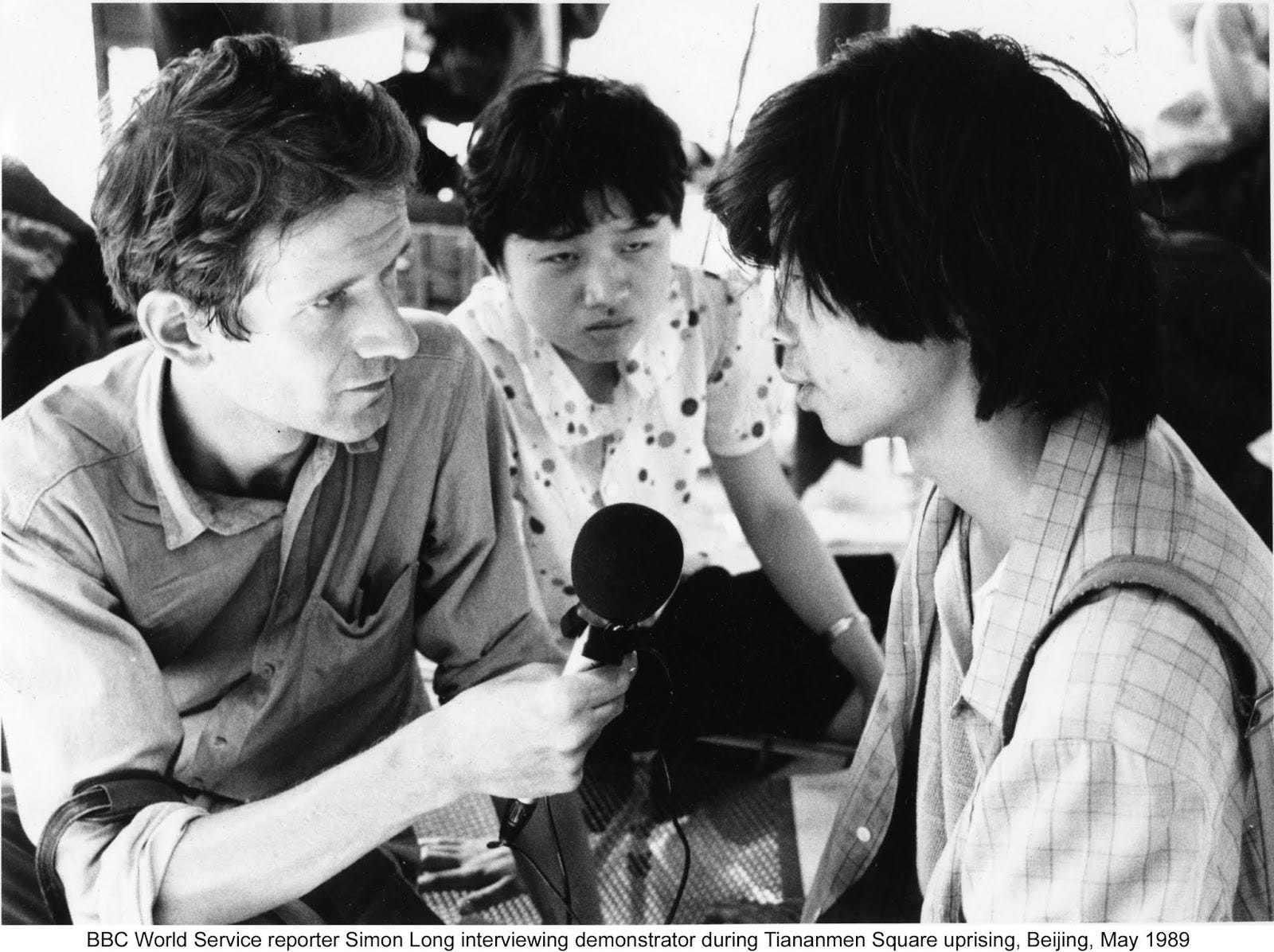
After my experiences in Moscow in which the activities of journalists were closely monitored and often restricted, I was amazed at how much freedom of movement we had in Beijing. It was, at that time anyway, a pretty open society, once you got below the top tiers of government. When we first began getting reports of troop movements, one of our correspondents went out and found a couple of convoys surrounded by swarms of local people, refusing to allow them to move, A major in charge of one of the convoys was quite happy to be interviewed in English.
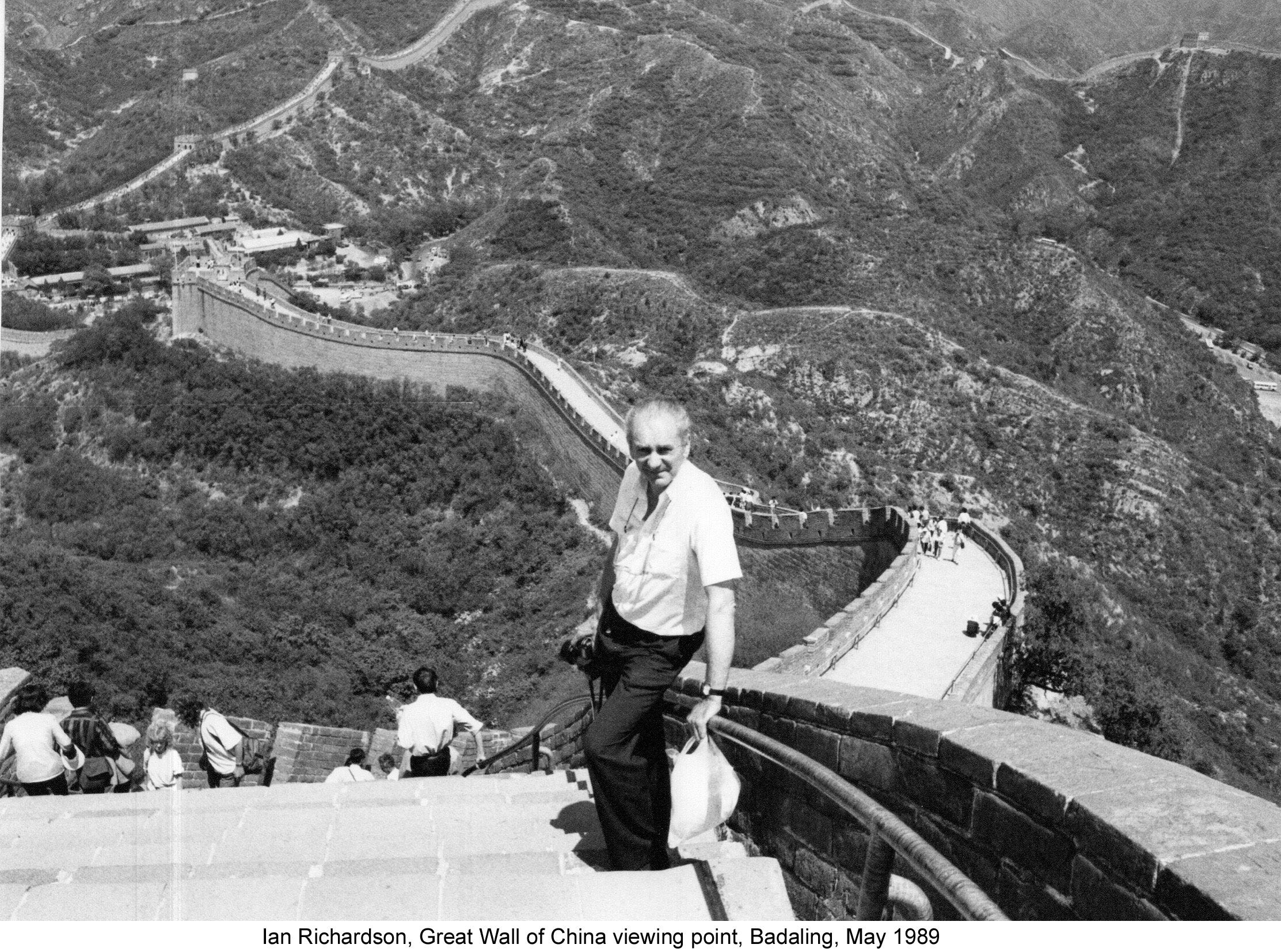
I also went troop hunting on a couple of occasions. The first time I got an English-speaking taxi driver to take me to the Great Wall at Badaling, where we had heard rumours of troop concentrations.
My driver was excited by the idea of trying to find troops and took me on a lung-wrecking climb up to a lookout on the Great Wall. It was a beautiful clear day, and he and I dragged a public telescope across the path to look down on the plain beyond the Wall to scour the countryside for any sign of military movements. We spotted what looked like a camp and drove there for a closer view. We found a lot of evidence of a military presence, but eventually decided it might be unsafe to go further.
The next day I went troop hunting in another taxi with a correspondent for the Times of London. Again, the taxi driver was enthusiastic about helping us. He took us to an area in west Beijing where the troops were reported to be gathering, and he even got a local to hop in the taxi and take us to the exact spots. We found one lot of troops had taken over a military warehouse, while another was hiding (rather badly) in a vast building supplies storage area. We later spotted soldiers going into the Army Museum in central Beijing. It was good fun, though I imagine that if he had tried something similar in Moscow, we’d have been lifted by the KGB before we’d got more than a block or two. In fact, we finally came to the conclusion that the Chinese authorities didn’t mind us discovering and reporting troop movements because it helped them in their war of nerves with the student protesters.
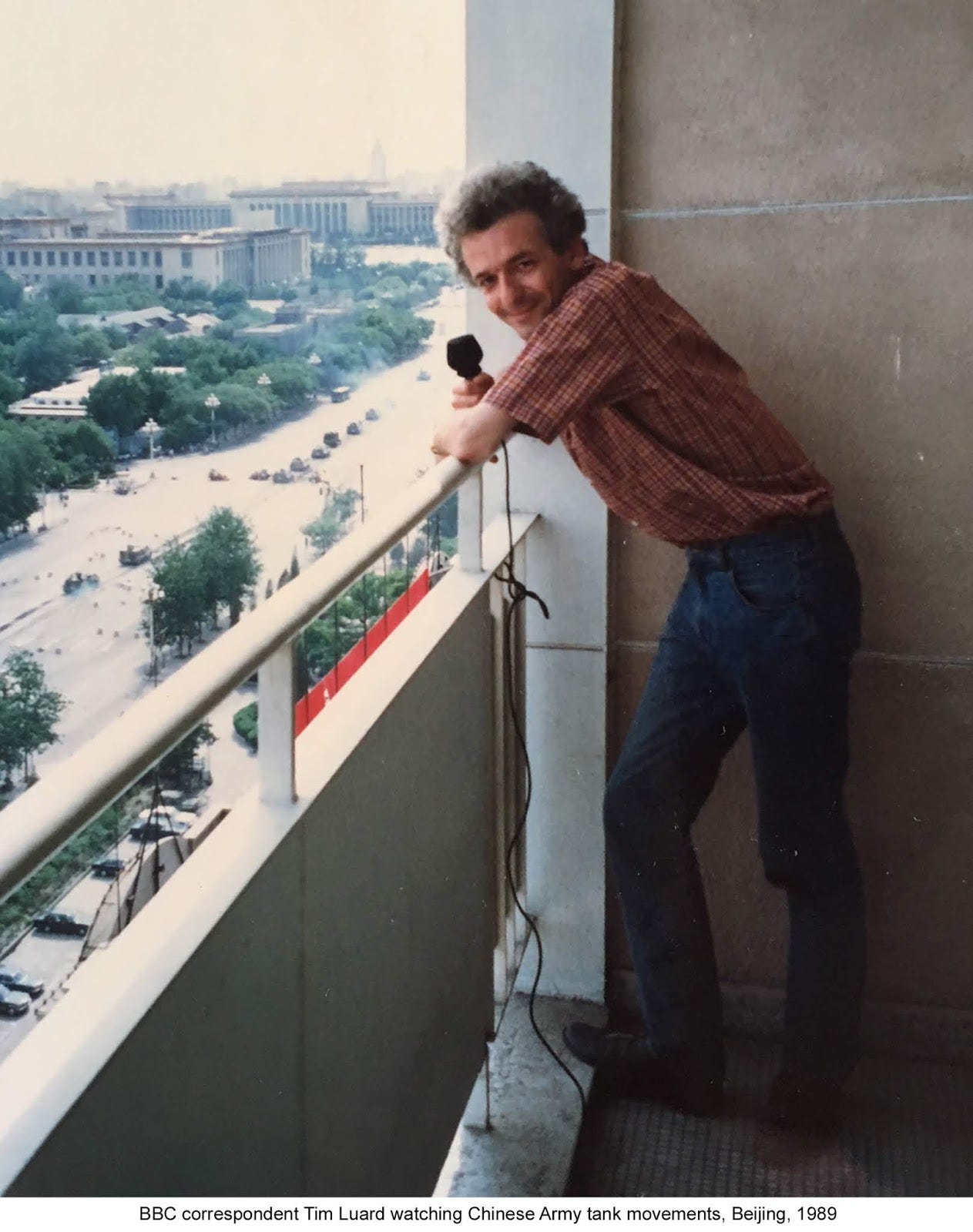
Throughout my visit, the weather was mild to hot. There was a colossal downpour one day, but otherwise it was dry and sunny. Despite this, there were only a couple of days with a bright blue sky, because of the terrible pollution. Most of the pollution seems to come from coal fires. There was also a lot of dust in the air, causing everything to feel gritty. Anti pollution measures are almost unknown in China. One of our correspondents recounted how he had been taken by an official to a hill overlooking an industrial town and proudly told: “Look, every chimney is smoking.”
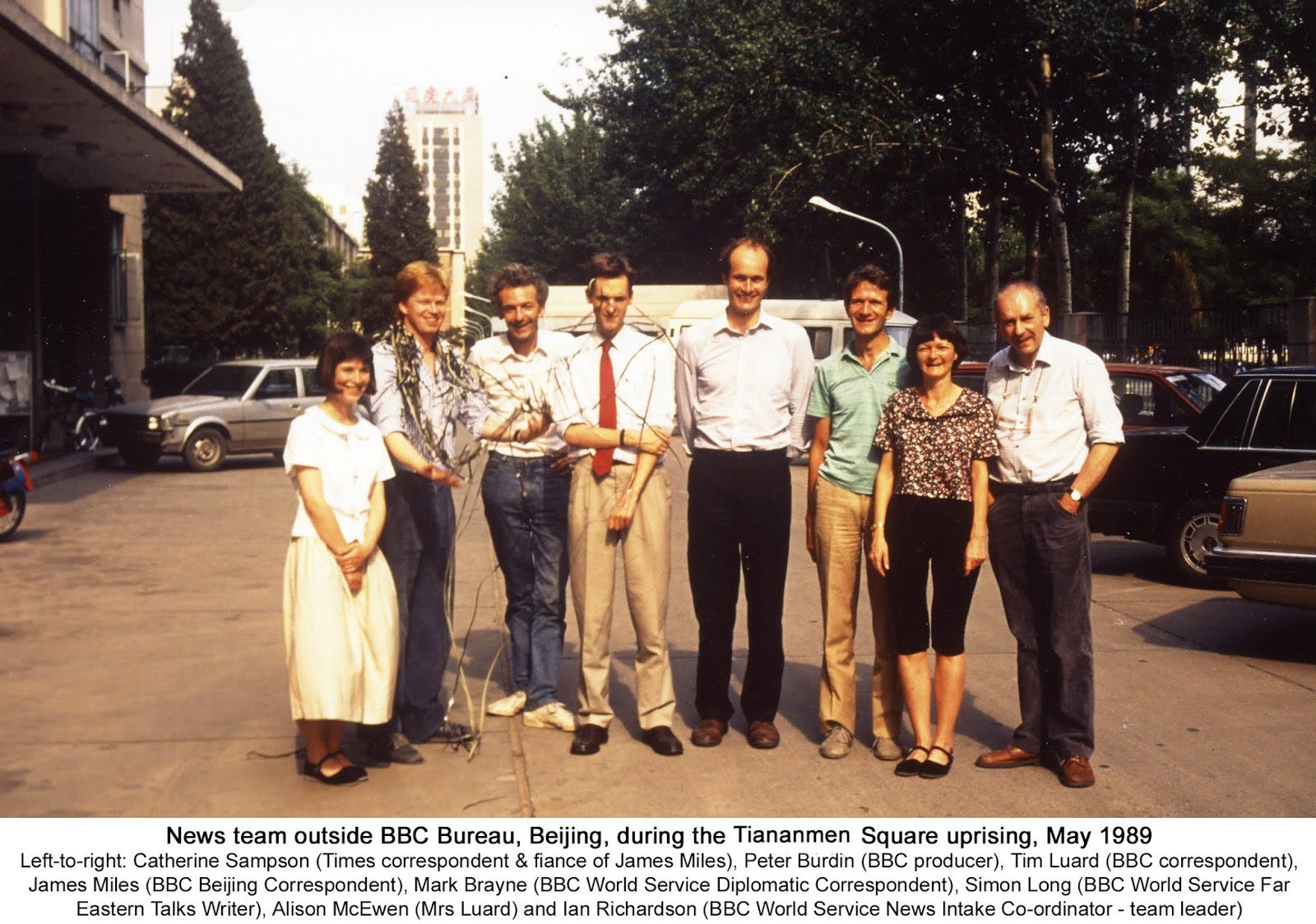
As the end of my third week in Beijing drew to a close, I was exhausted and it was decided that there was little need for me to stay further, so I pulled out at the weekend and flew back to London. Peter Burdin and Mark Brayne followed suit a day later. We were not to know that within a week, the situation would take an appalling turn for the worse.
I felt quite shattered when it happened – partly because I knew what James Miles, Tim Luard and Simon Long would be going through, but mostly because it is reasonable to assume that many of the people we met and interviewed in Tiananmen Square and elsewhere are now dead or in prison. It was most difficult to reconcile the scenes with the cheerful, spontaneous protests that had been part of my life for three eventful weeks. The people of China had really been asking for very little, yet it was clearly too much for those who had no compunction in turning Tiananmen Square and surrounding streets into a slaughterhouse.
I still find it hard to believe the way the Democracy Movement was so brutally crushed. Up to the point I left Beijing everyone was in fairly high-spirits, hoping for a new age in China, despite the fact that the hard-liners appeared to be winning the power struggle. Instead, the country was plunged back into political darkness.
That ends the Beijing uprising report.
Other chapters of can be found HERE.